The international political stage in 2025 is undergoing an unprecedented "restructuring of order." The boundaries of traditional great power rivalry are being redefined by technological revolution, climate crisis, and geopolitical shifts, with emerging powers seeking breakthroughs amidst regional conflicts and global governance challenges. This transformation is not merely a reshuffling of the power structure, but a profound struggle over the rules governing the future world.
The international situation in 2025 continues the turbulent tone of recent years, exhibiting transitional characteristics of "accelerated disintegration of the old order and the unsettled formation of a new one." The overlapping challenges of shifting great power policies, spillover effects of geopolitical conflicts, divergent economic recovery, and the failure of global governance are propelling the world into a "rebalancing" phase characterized by high risk and high uncertainty.
Great Power Rivalry: The Struggle Between Unilateralism and Multipolarity
- America First Policy Exacerbates Global Disorder
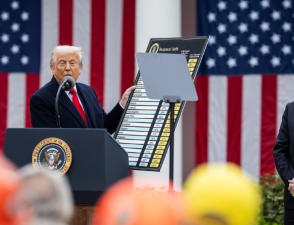
Trump's second term continues the "America First" approach, domestically implementing tax cuts and industrial repatriation, while internationally reshaping trade rules with tariff wars, planning to impose high tariffs on countries such as China, Mexico, and Canada, potentially triggering global supply chain disruptions and escalating trade frictions. Its foreign policy has become more transactional, such as pressuring Ukraine to make concessions to end the Russia-Ukraine conflict and reducing its international obligations (e.g., withdrawing from the Paris Agreement), further weakening the legitimacy of multilateral mechanisms.210 US unilateralism has not only exacerbated conflicts with traditional allies but also accelerated the process of global power decentralization, prompting powers like the EU and India to seek strategic autonomy.713
- The Rise of the Global South Impacts Western Hegemony
The collective rise of Global South countries, represented by China, India, and Brazil, is changing the Western-dominated international order. China is expanding its influence through the Belt and Road Initiative and the BRICS cooperation mechanism, promoting de-dollarization and a new economic governance architecture; India is strengthening its regional voice through rapid growth and a "neighborhood first" policy.215 The Munich Security Report points out that multipolarity has become a reality, but the lack of consensus on rules has exacerbated the risk of bloc formation, and the differences between emerging powers and the West in values and development models are difficult to bridge.713
Geopolitical Conflict: From Local Confrontation to Systemic Risk
- The Russia-Ukraine Stalemate and the European Security Dilemma
The Russia-Ukraine conflict has entered its third year, with both sides maintaining a military stalemate and a willingness to negotiate. The Trump administration's cuts to aid to Ukraine forced Europe to assume greater responsibility, but political turmoil in Germany and France, along with the rise of far-right forces, weakened EU cohesion. Russia maintains its battlefield advantage through hypersonic weapons, while the sustainability of Ukraine's reliance on Western military aid is questionable, potentially leading to a protracted conflict and a restructuring of the Eastern European security architecture.
- Power Vacuum and Proxy Wars in the Middle East
Following the fall of the Bashar al-Assad regime in Syria, Israel expanded its military operations, launching airstrikes against Syrian air defenses and penetrating deep into Syrian territory. The involvement of regional powers such as Iran and Turkey has deepened, significantly increasing the risk of proxy wars. Israeli-Palestinian peace talks have stalled due to territorial and security disputes, and the difficulties in rebuilding Gaza and Hamas's resistance make it difficult for a short-term ceasefire to translate into long-term peace.
- Dual Pressures on Asia-Pacific Stability
Temperature on the Korean Peninsula is escalating due to the strengthened US-South Korea military alliance, while political instability in South Korea (the impeachment of Yoon Seok-yeol) adds uncertainty. The Myanmar military government and opposition are fiercely battling over the 2025 general election, and the spillover effects of civil war could impact ASEAN integration. Meanwhile, RCEP deepens regional industrial chain integration, but the US-China technological competition and supply chain "decoupling" threaten the resilience of the Asia-Pacific economy.
Regional Hotspots: Escalating Conflicts and Reshaping Order
In 2025, the "domino effect" of regional conflicts will become increasingly apparent:
- Middle East: Power Reshuffling Under Energy Transition
Saudi Arabia and Iran normalized relations under China's mediation, but proxy wars in Yemen, Syria, and other regions continue. With the acceleration of the global energy transition, Middle Eastern oil-producing countries face survival anxieties in the "post-oil era," while the UAE, Qatar, and other countries are accelerating their transformation towards the digital economy and aerospace industry, attempting to reshape regional leadership.
- Indo-Pacific: The "Technological" Escalation of Maritime Disputes
Disputes in the South China Sea and East China Sea have shifted from traditional military confrontation to "gray zone" games: unmanned surface vessel patrols, underwater drone reconnaissance, and satellite jamming technology have become new focal points. Japan and Australia are increasing military cooperation with NATO, attempting to build an "Indo-Pacific version of NATO," but Southeast Asian countries remain cautious in choosing sides, preferring to balance the influence of major powers through the ASEAN framework.
- Africa: The Awakening of Resource Nationalism
The competition for key mineral resources such as lithium and cobalt has made Africa a new battleground for great power rivalry. The Democratic Republic of Congo announced a 30% "resource sovereignty tax" on lithium exports, sparking protests from European and American companies; China, meanwhile, is deepening its ties with African countries through a "whole-industry chain cooperation" model (mining + processing + battery manufacturing). At the same time, the African Union is promoting the construction of a "Continental Free Trade Area" in an attempt to escape the "resource curse."